Toothbrushing and cleaning your teeth
Most people were taught from an early age that we should brush our teeth morning and evening to avoid cavities, but that is not the only reason we brush our teeth. We also do it to keep our entire mouth healthy, keep our teeth healthy and strong, and it is beneficial for our general health as well.
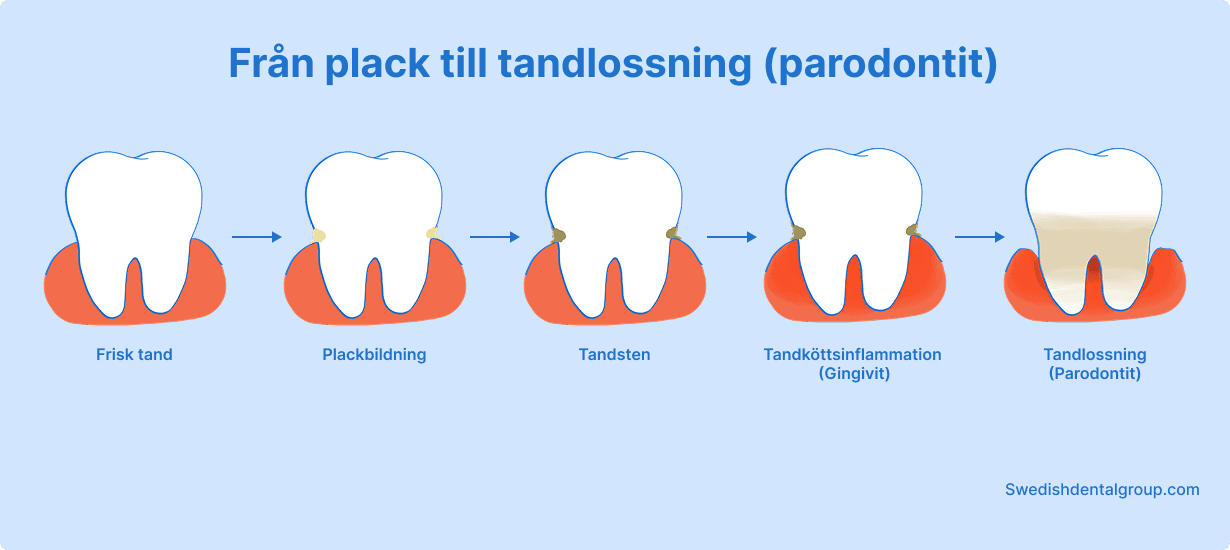
Using the correct brushing technique is actually the most important part of brushing your teeth, and not necessarily which toothbrush you use. With the correct technique, you remove plaque and bacteria that can form tartar when they are allowed to remain on the teeth.
The correct technique with a manual toothbrush
When using a regular manual toothbrush, you should use small, gentle movements and work your way along the teeth rather than using large back-and-forth strokes across the row of teeth, which is often done out of habit because people think it will make the teeth cleaner and save time. In fact, this does not clean as effectively because the bristles of the toothbrush bend over and can no longer remove plaque and bacteria properly.
The toothbrush should be angled at 45° toward the gumline, where bacteria and plaque most often accumulate.
Brushing your teeth often takes longer than the two minutes we recommend, but it is a good guideline to brush for at least two minutes. Consider setting a timer!
Electric toothbrush
We in dental care almost always recommend an electric toothbrush because it helps us clean the teeth more thoroughly, and electric toothbrushes often keep track of the brushing time for us so that we actually brush for at least two minutes each time.
Modern electric toothbrushes often have a rotating brush head combined with a pulsing effect and micro-vibrations, which studies have shown can result in cleaner teeth.
Brushing with an electric toothbrush with a small, round brush head requires a different technique than brushing with a manual toothbrush. The electric toothbrush head should systematically follow the shape of the tooth. Hold the brush still against the tooth and then angle it toward the spaces between the teeth, down toward the gumline and up toward the chewing surface of the tooth.
Let the electric toothbrush do the work. Therefore, you should not scrub back and forth along the row of teeth as you would with a manual toothbrush. Instead, guide the brush from tooth to tooth.
Choosing toothpaste
We are often asked which toothpaste we recommend, and the truth is that we do not recommend any particular brand. What we recommend is that the toothpaste should contain fluoride, which almost all commercially available toothpastes do.
If you have sensitive tooth necks and experience tooth sensitivity, we recommend a toothpaste specifically designed for sensitivity. There are many good and effective brands, often labelled *sensitive* by the manufacturers.
The recommended amount of toothpaste when brushing is approximately 2 cm on the brush head. If you are using a smaller brush head, you can add more toothpaste during brushing.
A fun rule to remember
An easy rule to remember is 2-2-2, which stands for: 2 times a day, for 2 minutes, with 2 cm of toothpaste.
Cleaning between your teeth
Many people are advised during a dental examination to use dental floss or interdental brushes. The reason is that a toothbrush does not do the entire job of cleaning your teeth.
A lot of bacteria accumulate between the teeth and along the gumline because these are areas of the mouth that are well protected from the tongue, cheeks and lips. Using dental floss or interdental brushes allows us to remove bacteria between the teeth that the toothbrush cannot reach.
Using the correct flossing technique is just as important as using the correct brushing technique. Dental floss is smooth/waxed so that it can be guided between the teeth. If you simply push the floss between the teeth and pull it back out again, it will not be able to collect the bacteria.
It is important to gently work the floss down between the teeth so that you do not damage the gums. First, press the floss against the side of one tooth so that the floss is held tightly against it, and move the floss up and down without damaging the gums.
Bring the floss back up and clean the floss if you are using floss on a floss holder. If you are using regular floss, move your grip so that a new, clean section of floss is guided between the same teeth again. Repeat the procedure against the other tooth.
Each time you use the floss, you should therefore guide the floss between the same teeth twice: first to clean the back of the front tooth, and then again to clean the front of the back tooth.
Finding the correct size of interdental brush can sometimes be difficult. One tip when choosing the size is that it should fit between the teeth with slight resistance, but without the brush bending so that the metal wire rubs against the teeth.
If you use an interdental brush that is too small, you will not remove the bacteria properly. If you use one that is too large, you may damage the teeth.
In depth
Mouthwash, fluoride rinse and rinsing after brushing
After brushing your teeth, we recommend that you do not rinse your mouth afterward. It is enough to spit out the excess toothpaste while leaving the remaining toothpaste in your mouth.
Toothpaste is the product on the market with the highest fluoride concentration, and fluoride is important for preventing cavities. If the toothpaste is allowed to remain in the mouth, we get the best preventive protection we can provide for our teeth.
A fluoride rinse containing 0.2% NaF (sodium fluoride) can preferably be used in the middle of the day, for example after lunch or a snack, as a small fluoride boost for the teeth. If you use it in connection with brushing your teeth, you instead dilute the fluoride concentration in your mouth that you received from the toothpaste.
Mouthwash containing less than 0.2% fluoride or mouthwash that does not contain chlorhexidine (used as an antibacterial agent) does not provide any benefit for your teeth or oral health.